

That “Energy-Efficient” Replacement Window
Might Not Be Certified For The NY Metro
How To Read A Window’s NFRC Label So You
Don’t Get Stuck With The Wrong Product.
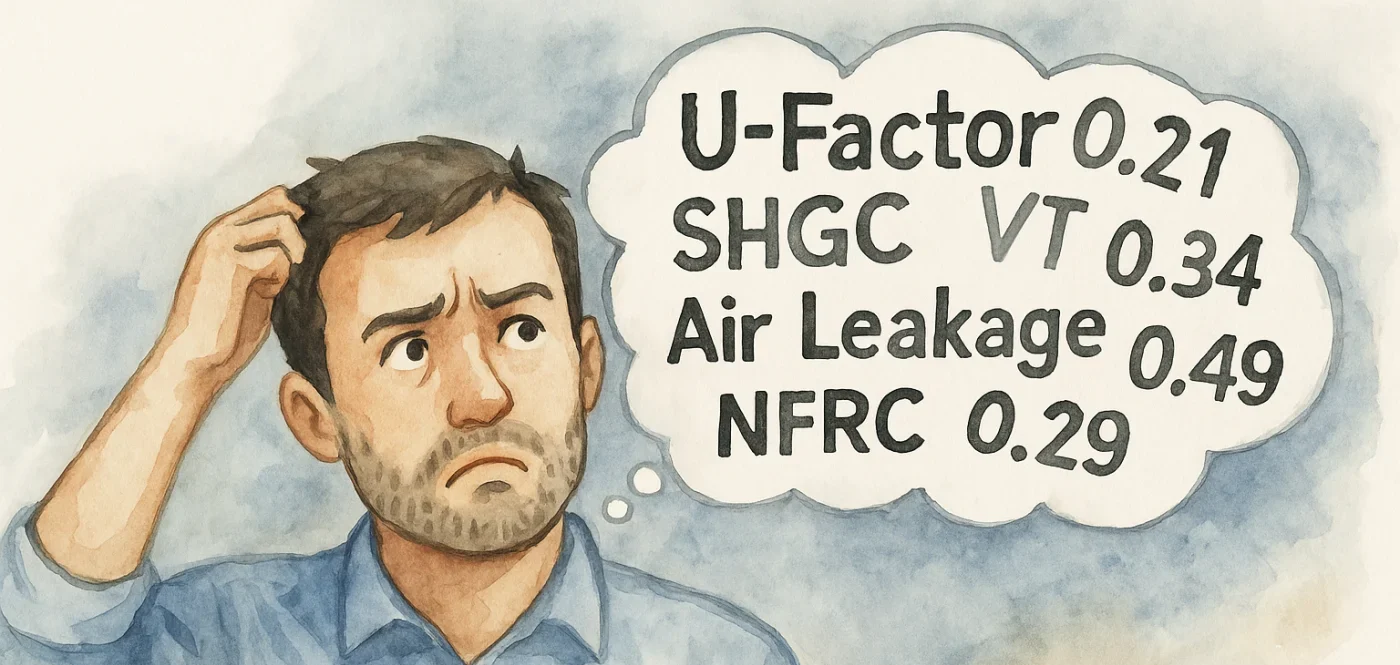
If you’re shopping for replacement windows, chances are you’ve seen a little white label stuck to the glass. They’re typically filled with numbers, acronyms… and not much explanation.
That label is called the NFRC label. It tells you everything you need to know about how a window performs. But here’s the catch: if you don’t know what to look for, those numbers won’t mean much.
This guide will show you how to decode the NFRC label, explain why it matters for homeowners in the NY Metro area, and introduce you to our preferred windows that check every box: OKNA Windows.
What Is The NFRC Label?
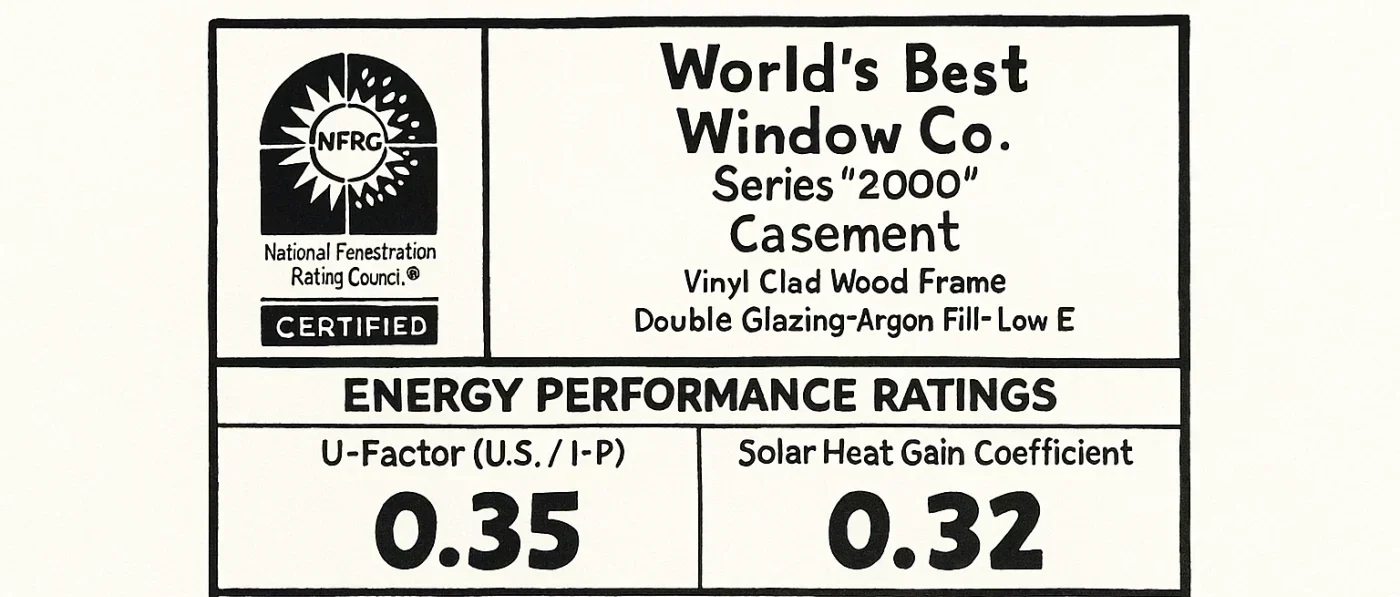
The National Fenestration Rating Council (NFRC) is a nonprofit that independently tests and certifies the energy performance of windows, doors, and skylights. Every NFRC-rated product comes with a label that breaks down how well it performs in key categories.
Think of it like a Nutrition Facts label. But instead of calories and fat, you’re looking at insulation, light transmission, and air leakage.
Here’s what those numbers actually mean…
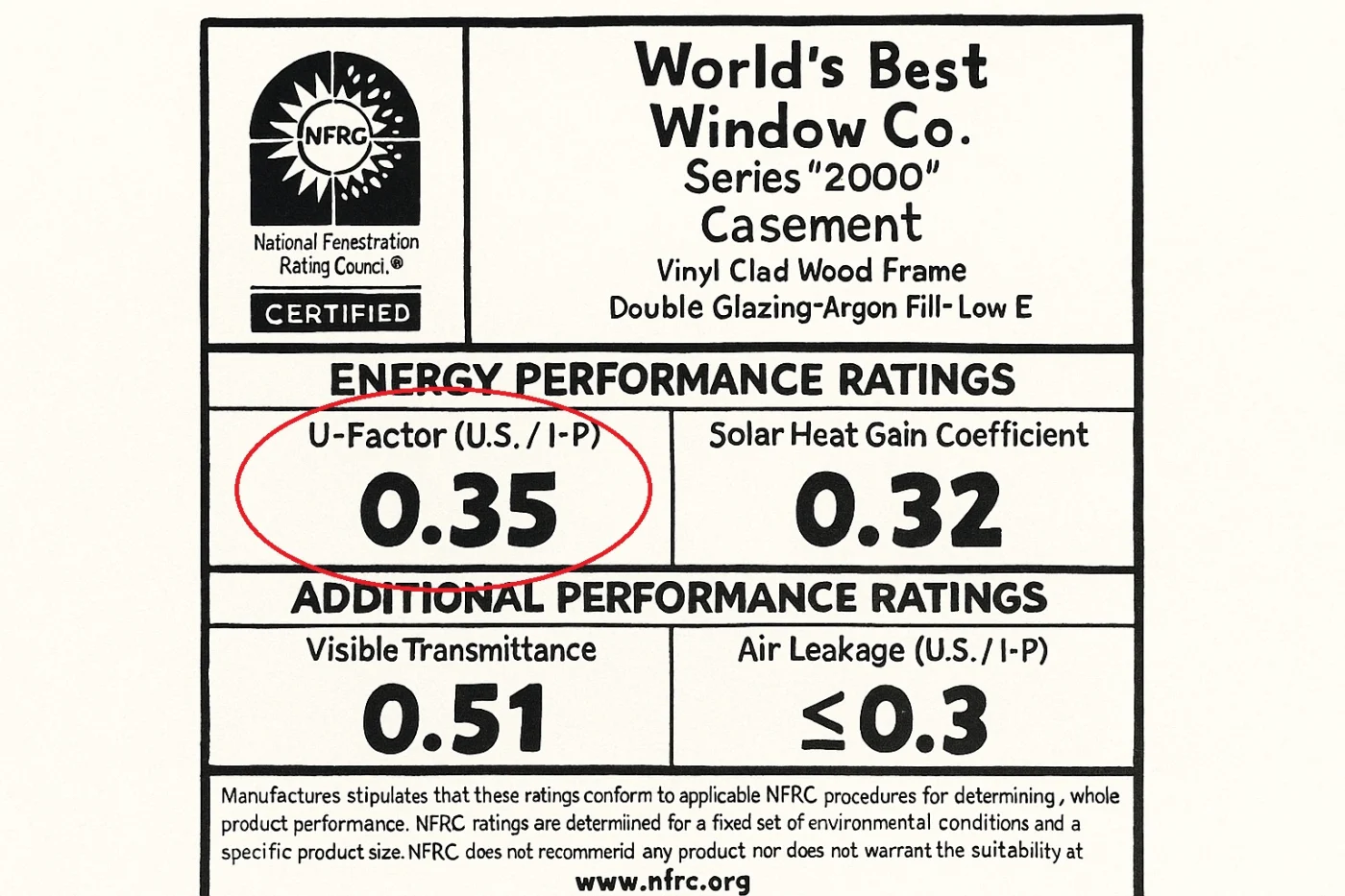
U-Factor: How Well The Window Insulates
- What It Measures: Heat transfer through the window (frame, glass, and spacers)
- General Scale: 0.20 to 1.20 (lower is better)
- ENERGY STAR® Standard (Northern): 0.22 or lower
- OKNA Windows: As low as 0.13
Why Does U-Factor Matter?
U-Factor is the most important metric for cold-weather climates like New Jersey, Connecticut, and New York. It measures how well a window keeps heat from escaping your home. Lower numbers mean better insulation… and lower energy bills in the winter.
For Northern homeowners, a U-Factor of 0.22 or lower makes the Energy Star cut. Go higher, and you’re essentially letting money fly out the window every time your furnace kicks on.
With a U-Factor minimum rating as low as 0.13, our OKNA product lines are specifically engineered for maximum insulation in Northern homes.
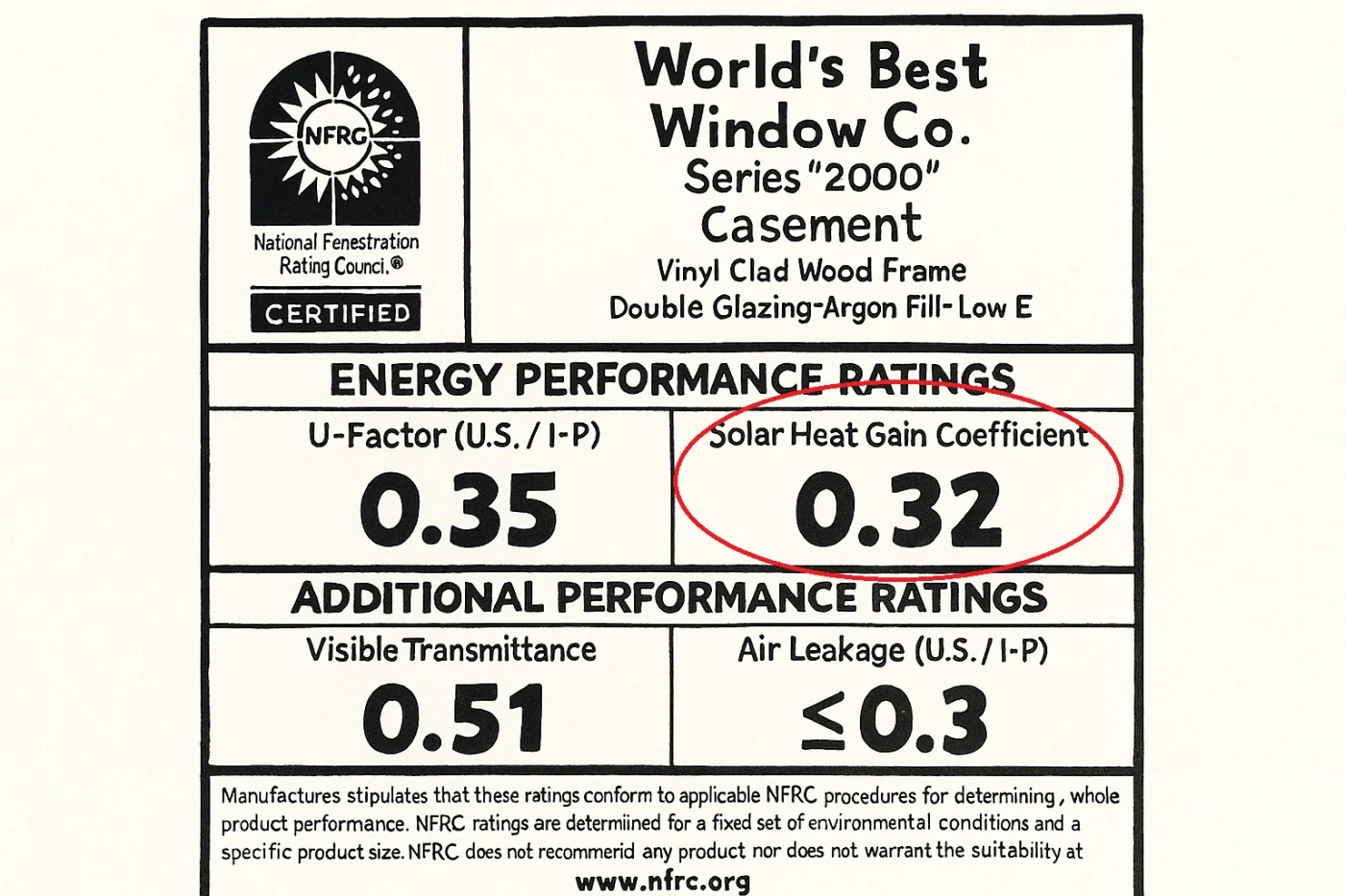
Solar Heat Gain Coefficient (SHGC): Blocks Summer Heat
- What It Measures: How much solar heat enters through the glass
- Scale: 0 to 1 (lower is better)
- ENERGY STAR® Standard (Northern): 0.17 or lower
- OKNA Windows: 0.14 (Min)
Why Does SHGC Matter?
SHGC tells you how much of the sun’s heat gets through your window. A lower SHGC means less solar heat enters your home, which is great when you’re trying to stay cool during a NY Metro summer.
For the Tri-State area, a good SHGC is around 0.30 or lower. Too high, and your rooms can feel like a greenhouse by mid-July. Too low, and you might block out the natural winter sunlight that helps warm your home on cold, sunny days.
The glass in OKNA Windows strikes the perfect balance for year-round comfort, with SHGC ratings as low as 0.14. You stay cool in summer, cozy in winter… and comfortable no matter the season.
Visible Transmittance (VT): Lets In Natural Light
- What It Measures: How much visible light comes through the window
- Scale: 0 to 1 (higher is better)
- ENERGY STAR® Standard (Northern): None
- OKNA Windows: 0.3-0.7

Why Does Visible Transmittance Matter?
A window with poor VT can make your rooms feel dark and gloomy. If the VT is too high, it can lead to glare and overheating. This occurs especially in rooms with lots of sun exposure. Good windows typically fall between 0.40 and 0.60 for Visible Transmittance. That’s enough to let in bright, natural light without turning your home into a greenhouse.
OKNA Windows allow plenty of daylight in… without sacrificing energy performance or fading your furnishings.
Air Leakage (AL): Stops Drafts In Their Tracks
- What It Measures: How much air sneaks through the window frame
- Scale: 0.1 to 0.3 (lower is better)
- ENERGY STAR®: 0.30 or less
- OKNA Windows: as low as 0.01
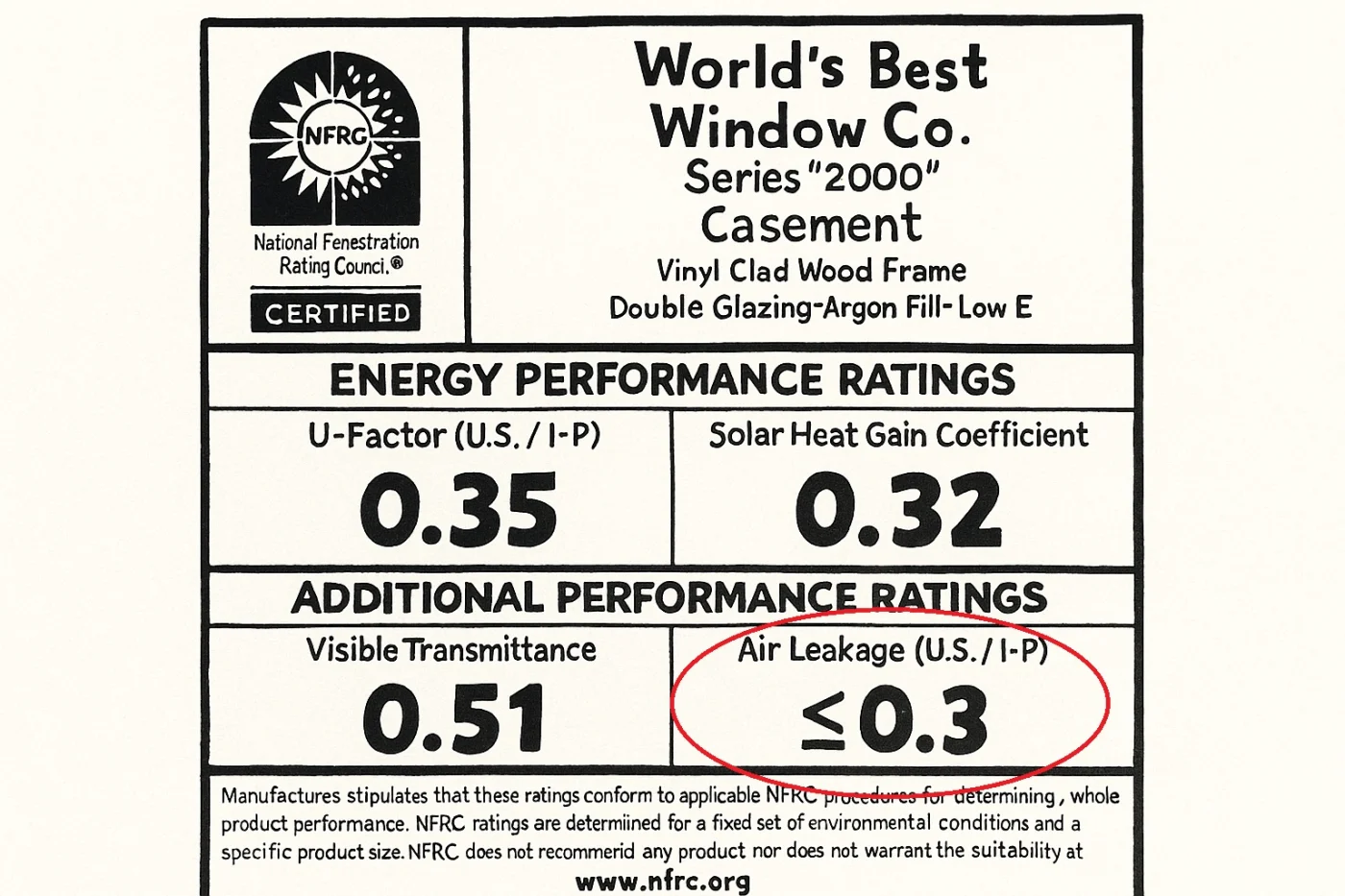
Why Does Air Leakage Matter?
Even the most energy-efficient glass won’t help much if outside air is sneaking in around the frame. Air leakage measures how drafty a window is, which has a major impact on both comfort and cost.
The lower the Air Leakage rating, the better. ENERGY STAR® sets the limit at 0.30. OKNA windows hit that mark or—depending on the type of window—even better. That means fewer chills in winter, less muggy air in summer, and no mystery drafts making your HVAC system work overtime.
Thanks to advanced weatherstripping and precision-installed frames, OKNA’s airtight performance helps you stay comfortable and save money, year after year.
Don’t Forget ENERGY STAR® Certification
Just because a window has an NFRC label doesn’t mean it meets ENERGY STAR® standards for your region. Some exterior remodelers install windows that are ENERGY STAR®-rated… but only for Southern states.
At Window King, we install OKNA windows because they are ENERGY STAR® certified for the Northern climate zone. That means you get performance engineered specifically for your home… not a Texan’s.
Bonus: Want to know the exact energy requirements for windows in your area? Use this handy ENERGY STAR® Climate Zone Finder.
Our Windows Are Designed For Where You Live
We’re not just here to sell you windows. We’re here to make sure you get the right ones.
OKNA offers windows built for our region’s wild weather and installed by certified pros who treat your home like their own.
Ready to upgrade to high-performance windows that are rated for your home’s location? Contact us to book your free in-home estimate.